
Strategic policy design and sequencing, that combines welfare reforms with tax reforms, opens policy options otherwise blocked by politically painful distributional disparities.
P2030 not only restores fiscal balance, it creates fiscal space – on which the future sovereignty of the nation depends. Seen in the light of the challenges over the next decade, the fiscal goals of the P2030 programme are not optional, they are existentially necessary.
Fiscal achievements in P2030:
- no new borrowing
- capital funded from revenues
- new taxes offset by reduced living costs for 44% of households
- 2.9% GDP invested in public services
- 1.4% GDP in new fiscal space
Service then Tax
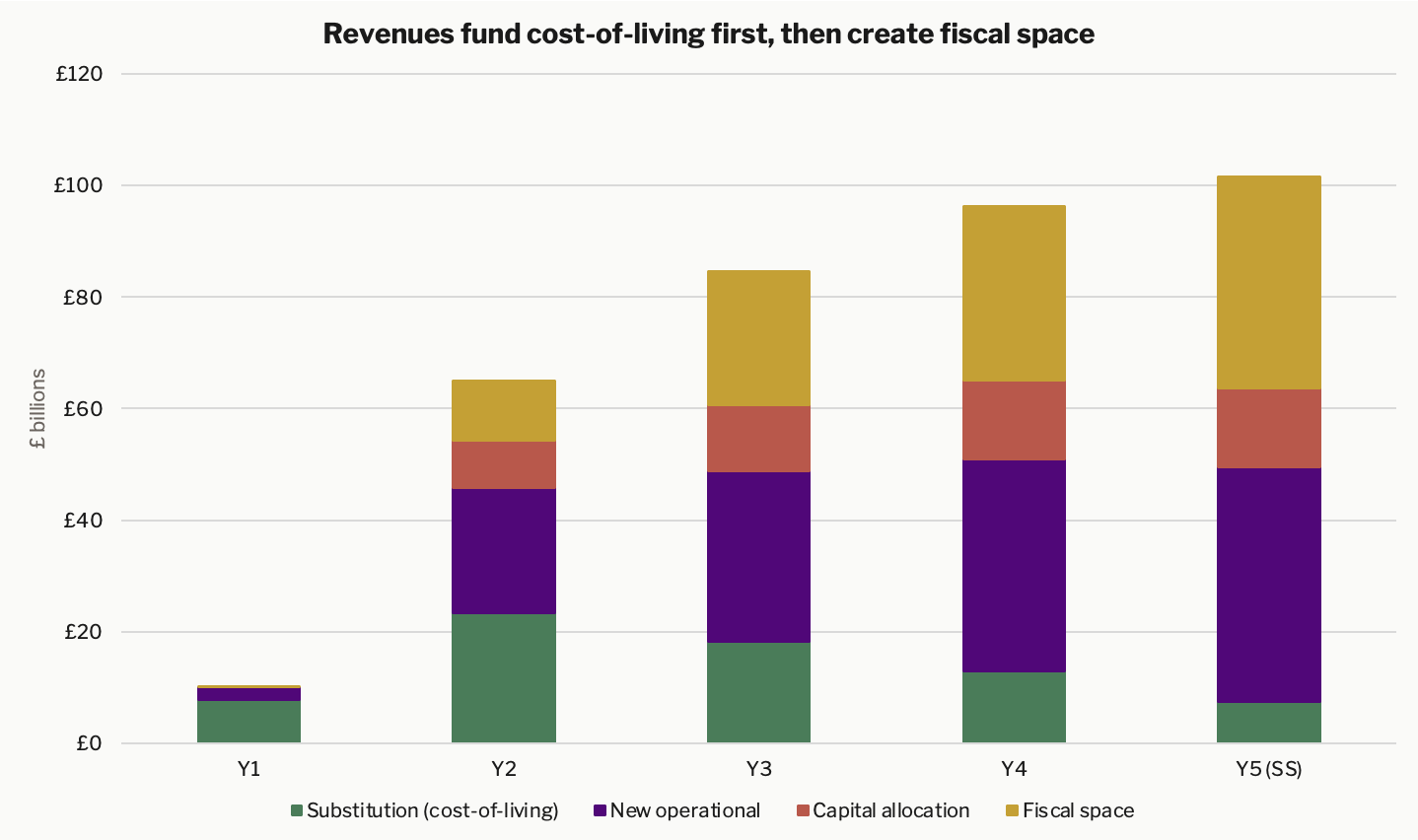
Creating fiscal space first needs permission from taxpayers to do so. That requires determined fixation on offsetting the impact on households, before the taxes are imposed. Services designed to reduce costs of living are kick-started, and the taxes they justify are phased in. Careful sequencing and design keep the cashflow positive.
The P2030 programme allocates all new revenues to spending on services that save people money at the start of the period, and only opens up fiscal space once credibility and permission have been earned.
Stabilise the base
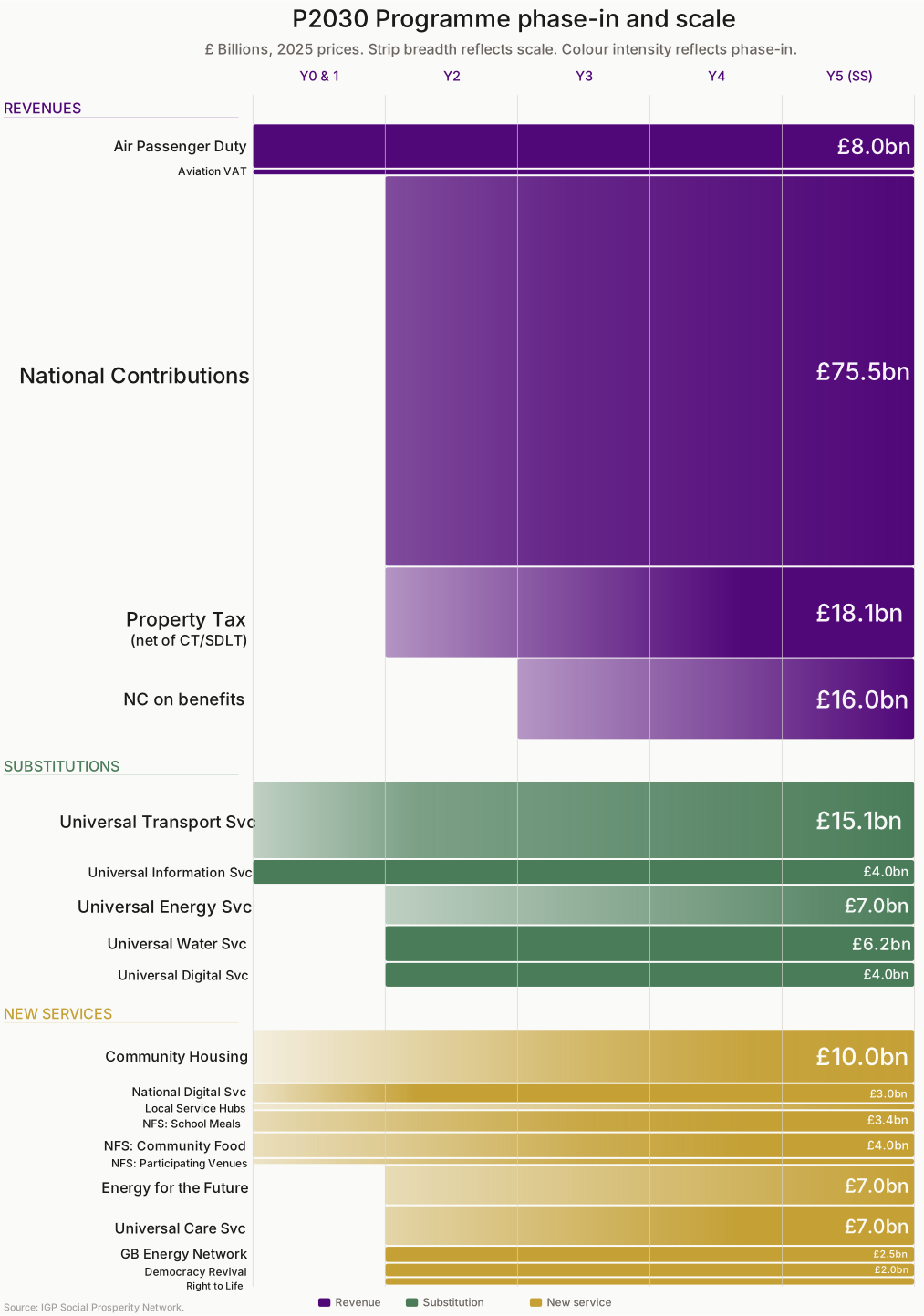
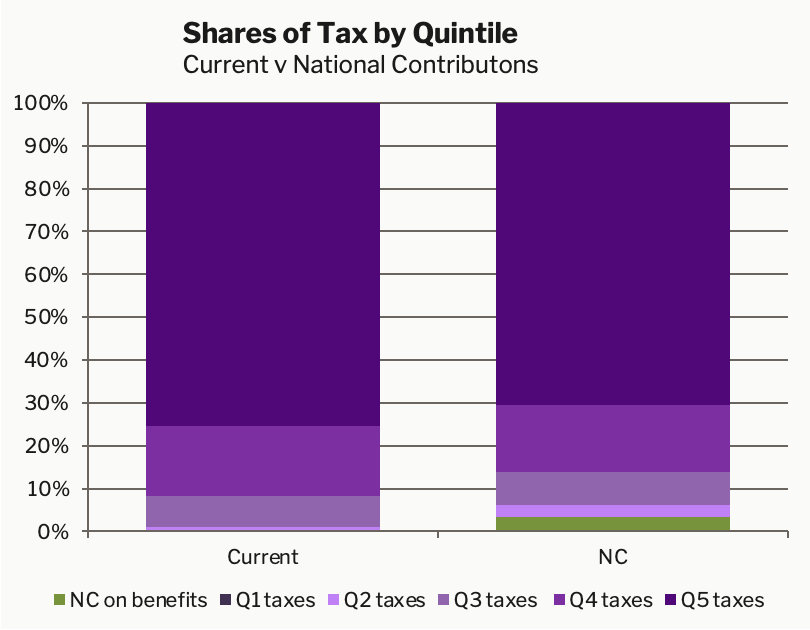
The UK has become increasingly reliant on tax revenues from a smaller and smaller section of its society at the same time that is has remained attached to revenues from taxes on things that are disappearing (e.g. fuel) or distortionary (e.g. Stamp Duty).
The P2030 reforms are designed to broaden the tax base, simplify the structures and establish long term revenue sources. The need to reform taxes is taken as an opportunity to simplify them as well.
Debt rehab
The UK carries an enormous debt burden that has restricted and threatened national fiscal sustainability in recent years. The “fiscal rules” are bumpers on a bowling lane whose effectiveness have been continually tested. Much better would be to learn to bowl properly.
Escaping from the strictures of elevated national public debt requires first that the government has a programme to stop borrowing more than it pays in interest every year. Something that the UK has failed to do in any year since 2002 except one (it’s 2018, in case you can’t see it on the chart).
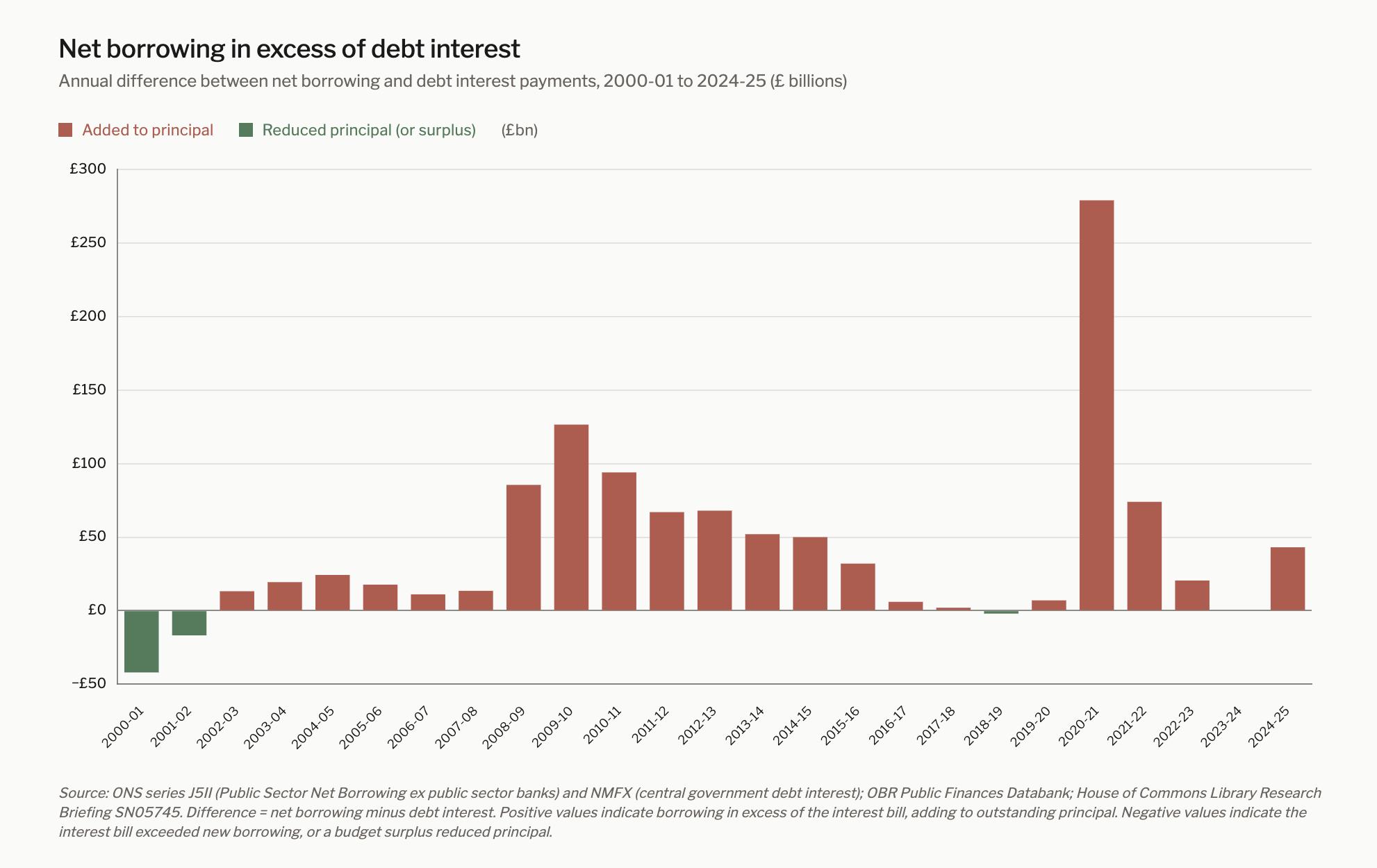
Once the government can credibly eliminate its current deficit then its debt can be rehabilitated as a long term safe asset. That is the only way to control the threat of interest consuming national sovereignty.
Borrowing is for emergencies, and emergencies are less expensive when fiscal resilience has been established.