
Revenues are increased immediately by tripling Air Passenger Duty and changes to the VAT rules for aviation, neither of which require primary legislation.
In Years 2 through 4, revenues from National Contributions (NC) and Property Tax phase in as revenues from Council Tax and SDLT are phased out. The gradual increase in NC is a result of the lags between PAYE updates (immediate) and revenues from personal tax returns (on submission). Property Tax is programmed to phase in over 3 years.
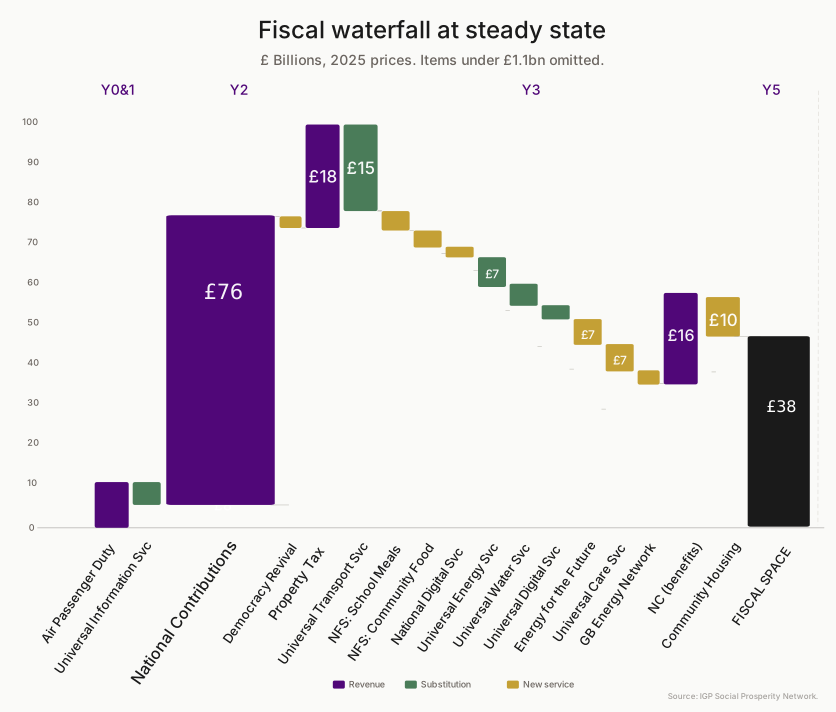
| REVENUES | Y0 & 1 | Y2 | Y3 | Y4 | Y5 (SS) | SS £bn |
|---|---|---|---|---|---|---|
| NC (incomes) | 0% | 69% | 86% | 93% | 100% | £75.5bn |
| Property Tax (net) | 0% | 34% | 67% | 100% | 100% | £18.1bn |
| Air Passenger Duty | 100% | 100% | 100% | 100% | 100% | £8.0bn |
| Aviation VAT | 100% | 100% | 100% | 100% | 100% | £0.3bn |
Benefits reallocation to Services
Starting in Year 3, NC is gradually applied to taxable (non disability) benefits, starting at one third of total liability and increasing by one third per year, reaching full implementation in the final year of the programme. The deductions are applied at source by DWP, remitted to Treasury, and re-assigned to the Services as part of the general fund.
By the time this policy starts in Year 3, 83% of all new services are in place. In Year 4, two thirds of the liability will be deducted and services will have reached 95%, and both reaching 100% implementing in Year 5. At which point, reallocated spending from benefits to services will account for 20% (£16 billion) of total new service expenditures (£80 billion).