
Universal Services
P2030 policies categorised as Universal Services (US) are primary designed to address insecurity, by driving down the cost of living and ensuring access to basic services, while strengthening resilience by building dependable infrastructure.
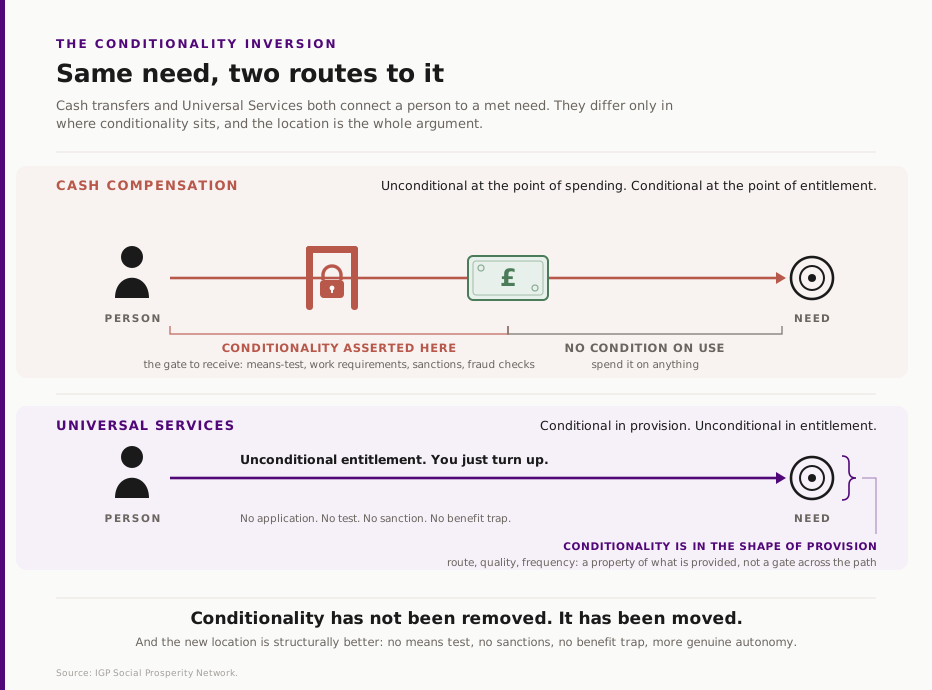
Key features of Universal Services are that they are unconditionally accessible to all citizens or residents based on needs, and that they have no tradable value – they are consumed at the point of need.
Universal Services are unconditional and unrelated to income. So changes in other aspects of life do not affect entitlements. It makes no difference if someone gets or loses a job – the services remain constant. This is possible because the content of the service is the condition, whereas cash benefits condition the person because the cash is fungible.
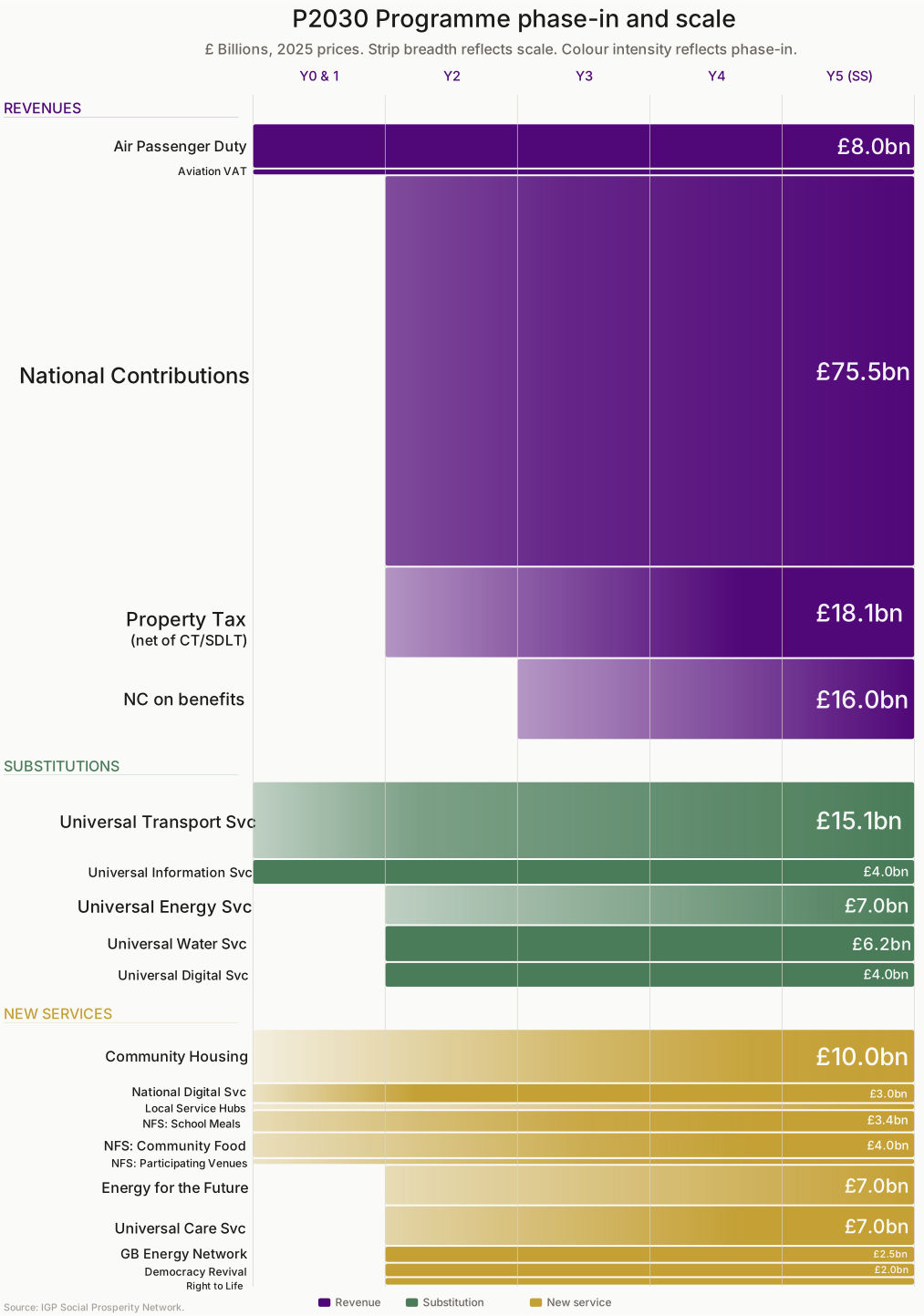
The policies, listed from highest expenditure to lowest, are:
- Universal Transport Service
- Universal Energy Service
- National Food Service
- Universal Digital Service
- Universal Information Service
- Universal Water Service
- Local Service Hubs
Revenue Reforms
Revenue Reforms are primarily designed to establish a clearly reciprocal social contract between citizens, which legitimises and licenses the taxation. The reforms focus on simplification and modernisation to establish a clear and self-evidently fair connection between collective support and individual contribution.
The policies, listed from highest net additional revenue raised to lowest, are:
- National Contributions incomes tax reform
- Property Tax reform replacing Council Tax
- Air Passenger Duty
- VAT on aviation
Policies included in this section to support Revenue Reforms but which do not have independent budget impact:
- Abolition of Stamp Duty Land Tax (replaced by National Contributions)
- Welfare adjustments (included with National Contributions)
- Tax year as calendar year (included with National Contributions)
- National Savings Bonds (included with National Contributions)
- Road Use Duty
Structural Reforms
Policies categorised as Structural Reforms are primarily designed to modernise and advance the efficient management of core infrastructures and resources.
The policies, listed from highest net budget impact to lowest, are:
- Energy for the Future
- GB Energy Network
- Water regulation reform (included with Universal Water Service)
- National Digital Service
- Digital Protection (ID & Privacy Security)
- Democracy Revival
- Skills Centres
- Equalised VAT on new house sales and renovations
- Healthy Food Levy
Policies included for which no budget impact is assessed:
- Employment Freedom
- International Competitiveness
- Environmental Border Adjustments
- Social Border Adjustments
Local priorities
Well-known deficits in local capacity are primarily addressed in P2030 by allocating national budgets, with localised implementation and decision-making.
These areas of need are addressed in the P2030 programme:
- Community Housing
- Universal Care Service
- GB Housing reforms
- Compulsory purchase reform
- Right to Sell